You don’t notice your septic system… until it starts demanding attention like a drama queen.
One day, everything’s fine. The next?
Your yard feels softer than it should.
There’s a smell you can’t quite ignore.
And suddenly, you’re deep in a rabbit hole of “leach field problems” at 11 PM.
Now you’re staring at two very different paths:
- Fix what’s happening beneath the surface with leach field treatment
- Or rip everything out and start over with a full replacement
One feels like a smart repair.
The other feels like a financial commitment you weren’t emotionally prepared for.
So how do you know which one actually makes sense for your situation?
Understanding What’s Really Going Wrong
Before you throw money at the problem, you need to understand what’s actually failing.
Here’s the truth most homeowners miss:
Your pipes usually aren’t the villain; your soil is.
Systems fail because of sodium that combines with the soil under your drain field pipes, creating what is known as hardpan soil or sodium-bound soil. This process stops airflow in the system.
Aerobic bacteria, which require oxygen and release CO₂ as a byproduct, can no longer survive. As airflow stops, anaerobic bacteria take over. These bacteria do not require oxygen and produce waste in the form of black, slimy material known as Bio-Mat.
That’s when things escalate:
- Water stops absorbing
- Waste backs up
- Your yard turns into a warning sign
So the root cause is not just Bio-Mat itself, but sodium-induced soil failure that leads to Bio-Mat formation.
The True Cost: Treatment vs Replacement
Let’s talk numbers.
Treatment
- Typically costs a few hundred dollars
- Minimal labor (no digging up your yard)
- Can extend system life by years
Full Replacement
- Can cost anywhere from $5,000 to $20,000+
- Requires excavation, permits, and time
- Disrupts your entire yard
Now here’s the key question:
Are you fixing the problem… or replacing everything out of fear?
When Leach Field Treatment Actually Works
Let’s clear something up: treatment isn’t a gimmick.
But it’s also not magic.
Effective treatment must address BOTH sodium buildup and Bio-Mat.
You’ll see real results when:
- Your system is in early or moderate failure
- The issue is related to sodium-bound soil and Bio-Mat buildup
- Your drain field isn’t beyond repair
A proper solution includes:
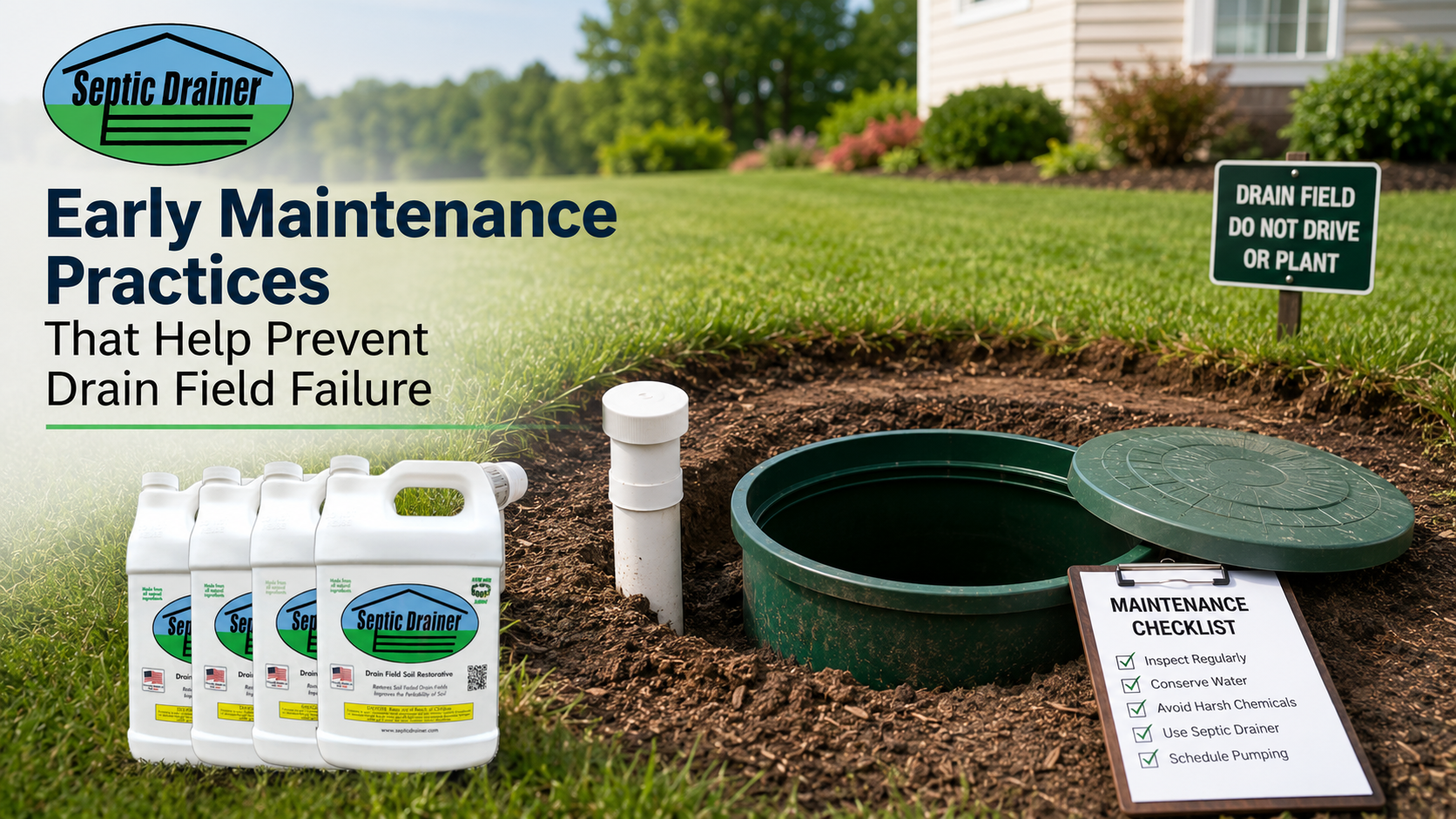
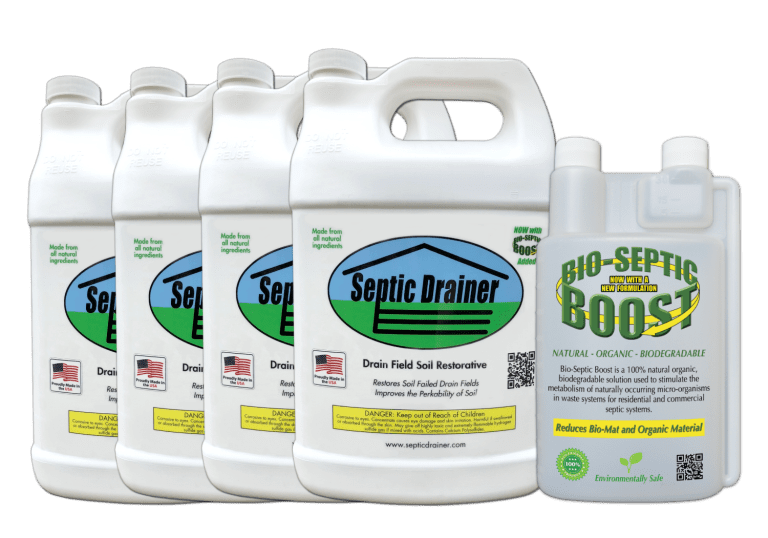
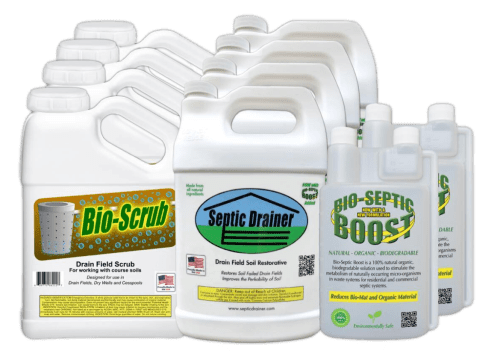
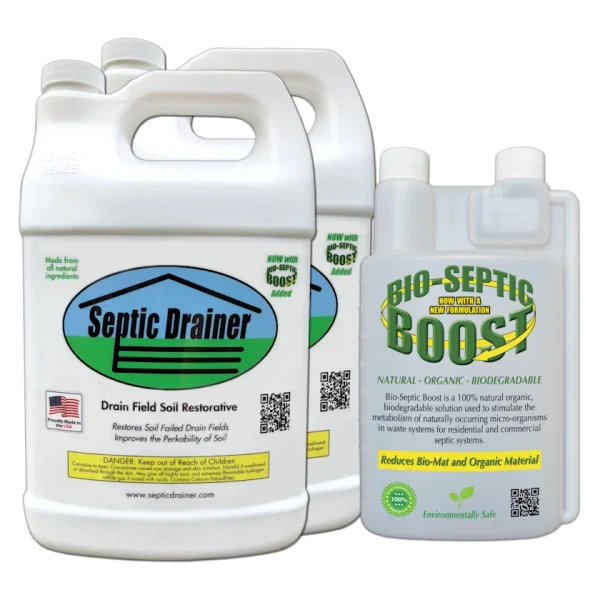
- Septic Drainer, which drives sodium out of the soil and restores proper soil structure and airflow
- Bio-Septic Boost, a biological stimulant that enhances aerobic bacteria by millions-fold, enabling them to consume Bio-Mat effectively
In these situations, treatment can:
- Restore soil absorption
- Improve drainage performance
- Eliminate odors
- Delay or avoid replacement entirely
When Full Replacement Becomes Unavoidable
Sometimes treatment won’t cut it.
You’re likely beyond repair if:
- The drain field is fully saturated
- Soil is compacted beyond recovery
- Pipes are broken or collapsed
- The system is extremely old
In these cases, treatment may only offer temporary relief.
Long-Term Value: What Saves You More Over Time?
This is where most homeowners make the biggest mistake.
They focus on immediate cost, not long-term value.
If You Choose Treatment Early:
- You spend less now
- You extend your system’s life
- You avoid major disruption
- You delay replacement costs for years
If You Ignore Early Signs:
- The problem worsens
- Repair options disappear
- Replacement becomes inevitable
- Costs skyrocket
Conclusion: What Should You Do Next?
You don’t always need to jump straight to replacement.
If your system is showing early warning signs, this is your window to act.
The key is addressing the true cause: sodium buildup and the resulting Bio-Mat.
A targeted approach:
- Removes sodium (Septic Drainer)
- Restores aerobic bacteria (Bio-Septic Boost)
- Eliminates Bio-Mat naturally
This approach:
- Targets the real issue
- Protects your investment
- Can save you thousands
Because of the difference between a small fix and a massive expense?
It’s usually just one decision made at the right time.