[fusion_builder_container type=”flex” hundred_percent=”no” equal_height_columns=”no” menu_anchor=”” hide_on_mobile=”small-visibility,medium-visibility,large-visibility” class=”” id=”” background_color=”” background_image=”” background_position=”center center” background_repeat=”no-repeat” fade=”no” background_parallax=”none” parallax_speed=”0.3″ video_mp4=”” video_webm=”” video_ogv=”” video_url=”” video_aspect_ratio=”16:9″ video_loop=”yes” video_mute=”yes” overlay_color=”” video_preview_image=”” border_color=”” border_style=”solid” padding_top=”” padding_bottom=”” padding_left=”” padding_right=””][fusion_builder_row][fusion_builder_column type=”1_1″ layout=”1_1″ background_position=”left top” background_color=”” border_color=”” border_style=”solid” border_position=”all” spacing=”yes” background_image=”” background_repeat=”no-repeat” padding_top=”” padding_right=”” padding_bottom=”” padding_left=”” margin_top=”0px” margin_bottom=”0px” class=”” id=”” animation_type=”” animation_speed=”0.3″ animation_direction=”left” hide_on_mobile=”small-visibility,medium-visibility,large-visibility” center_content=”no” last=”true” min_height=”” hover_type=”none” link=”” border_sizes_top=”” border_sizes_bottom=”” border_sizes_left=”” border_sizes_right=”” first=”true”][fusion_text]
Introduction
A septic system works quietly beneath the ground, handling wastewater safely and efficiently. When the system falters, it often starts with the drain field losing its ability to filter and absorb water properly. Homeowners may face slow drains, foul odors, or standing water across the yard. These issues signal underlying soil and biological challenges that demand more than surface-level fixes.
Understanding the causes of failure and applying targeted solutions ensures your septic system continues to run effectively. Reliable products and proper maintenance practices keep problems from escalating into costly system replacements.
Understanding Septic Leach Field Failure
Septic leach field failure happens when the soil beneath the system no longer allows wastewater to percolate through. The U.S. Environmental Protection Agency notes that about 90% of septic failures occur in the drain field. Once wastewater loses its natural pathway, backup, pooling, and odors quickly follow.
Sodium in wastewater often binds with soil particles, creating hard, impermeable layers. Over time, this reduces the ability of the ground to absorb water. Soil compaction under the pipes further limits permeability, while bacterial activity without airflow allows Bio-Mat to accumulate. Excess organic waste can push the system even further toward failure.
Signs Your Septic System Needs Attention
A healthy system rarely calls attention to itself. Problems become noticeable when efficiency drops. Common signs include:
These symptoms suggest that water and waste can no longer move smoothly through the soil. Prompt action prevents deeper damage and restores normal function.
Causes Behind Leach Field Malfunctions
Multiple conditions create drain field problems:
Recognizing these issues helps homeowners choose solutions that correct the actual cause rather than treating only symptoms.
Septic Drainer: Opening the Soil for Repair
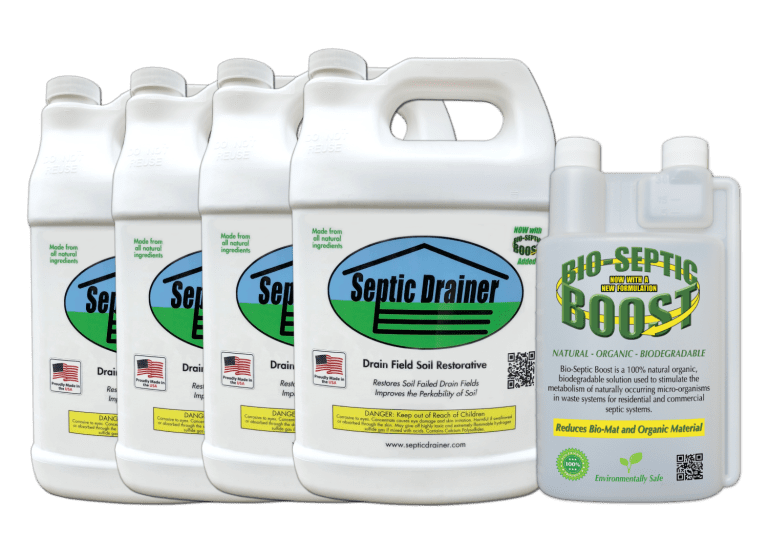
Septic Drainer, developed by RCS II, Inc, acts as a soil conditioner designed to restore permeability beneath drain field pipes. It works by breaking apart sodium-hardened layers and reopening the natural pathways for water and air. Once airflow returns, the right aerobic bacteria can flourish, consuming Bio-Mat and restoring balance.
Farmers have used its ingredients for decades to improve soil conditions. Today, the formula addresses 90% of septic issues without digging or replacing soil. By treating the ground directly, it refreshes the system and prevents recurring blockages.
Bio-Septic Boost: Supporting Healthy Bacterial Activity
While Septic Drainer restores airflow and breaks apart compacted layers, Bio-Septic Boost fuels the system’s biological engine. Made from sea plant extracts, it stimulates aerobic bacterial growth by up to 50%. These bacteria digest organic matter more effectively, helping to eliminate Bio-Mat while keeping waste moving smoothly.
This bio-stimulant works hand in hand with soil conditioning, ensuring both the physical and biological elements of the system remain in balance. Together, they provide lasting results far beyond temporary fixes.
Septic Drain Field Repair Kits for Every Condition
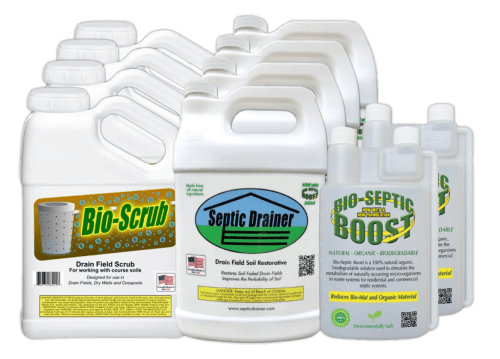
RCS II, Inc offers repair kits tailored for a range of soil types and failure stages. Each kit includes Septic Drainer and Bio-Septic Boost, with easy instructions for application.
These repair kits resolve drainage problems without excavation, restoring wastewater flow and eliminating surface pooling or foul odors.
Septic Maintenance Kits for Ongoing Care
Prevention plays the most important role in long-term septic system health. Maintenance kits offer simple, scheduled applications that keep soil permeable and microbial activity strong.
Options include:
Routine use of these kits reduces the chance of clogs, surface pooling, and Bio-Mat formation, extending the system’s lifespan while saving thousands in potential repairs.
What is a Cesspool and How Does It Differ?
Many homeowners wonder, what is a cesspool, and how does it compare to a septic system? A cesspool is an underground pit lined with concrete, stone, or brick that allows liquid waste to seep into the surrounding soil, while solids settle inside. Unlike septic systems, cesspools do not treat wastewater with bacteria before releasing it.
Because cesspools lack the filtration and treatment process, they often cause groundwater contamination and require more frequent pumping. They are less efficient than modern septic systems and have been phased out in many areas. Still, some older properties continue to use them, making it important to understand the difference when planning upgrades or maintenance.
Long-Term Care and Preventive Practices
Septic systems remain dependable when given the right care. Following these practices helps sustain performance:
A combination of good habits and the right products keeps wastewater flowing smoothly and prevents costly breakdowns. For more details, contact us now.
Frequently Asked Questions
Septic treatments improve soil permeability, restore airflow, and encourage bacterial balance. This combination eliminates clogs and maintains wastewater absorption.
A cesspool is a simple underground pit that allows liquid waste to seep into the soil while solids remain inside. They are less common because they lack treatment capability and often pollute groundwater.
Many systems see noticeable improvement within weeks, as soil opens up and bacterial activity increases. Full restoration depends on soil type and the extent of sodium buildup.
Yes, many treatment kits include simple instructions that allow homeowners to handle the application. More severe failures may still require professional evaluation.
Cesspools release untreated wastewater into the soil, which can contaminate groundwater and create public health risks. Septic systems treat and filter waste more effectively.
Yes, formulations are designed for multiple soil conditions, including clay, sandy loam, and gravel-based fields. Always follow product directions for best results.
A cesspool usually lacks a drain field and has a single large pit for waste. A septic system includes a tank and a leach field for filtering and treating wastewater.
[/fusion_text][/fusion_builder_column][/fusion_builder_row][/fusion_builder_container]