[fusion_builder_container type=”flex” hundred_percent=”no” equal_height_columns=”no” menu_anchor=”” hide_on_mobile=”small-visibility,medium-visibility,large-visibility” class=”” id=”” background_color=”” background_image=”” background_position=”center center” background_repeat=”no-repeat” fade=”no” background_parallax=”none” parallax_speed=”0.3″ video_mp4=”” video_webm=”” video_ogv=”” video_url=”” video_aspect_ratio=”16:9″ video_loop=”yes” video_mute=”yes” overlay_color=”” video_preview_image=”” border_color=”” border_style=”solid” padding_top=”” padding_bottom=”” padding_left=”” padding_right=””][fusion_builder_row][fusion_builder_column type=”1_1″ layout=”1_1″ background_position=”left top” background_color=”” border_color=”” border_style=”solid” border_position=”all” spacing=”yes” background_image=”” background_repeat=”no-repeat” padding_top=”” padding_right=”” padding_bottom=”” padding_left=”” margin_top=”0px” margin_bottom=”0px” class=”” id=”” animation_type=”” animation_speed=”0.3″ animation_direction=”left” hide_on_mobile=”small-visibility,medium-visibility,large-visibility” center_content=”no” last=”true” min_height=”” hover_type=”none” link=”” border_sizes_top=”” border_sizes_bottom=”” border_sizes_left=”” border_sizes_right=”” first=”true”][fusion_text]
Introduction
Maintaining a reliable septic system depends on a clean, functioning drain field. A well-chosen septic system cleaner helps restore drainage, control odors, and prevent serious issues from developing in your leach field. RCS II, Inc. offers science-backed solutions that enhance septic drain field cleaning while addressing the underlying causes of system failure.
Why Septic Drain Field Cleaning Needs Supportive Products?
Septic drain field cleaning aims to maintain the soil’s ability to absorb and filter wastewater. Problems often arise when sodium-rich wastewater creates a hardened layer under the drain field pipes. That layer disrupts airflow to the soil, leading to the accumulation of Bio-Mat—a slimy coating of anaerobic bacteria waste—right above the hardened zone. Without restoring soil permeability first, cleaning alone fails to produce lasting results. That’s where a targeted septic system cleaner becomes essential.

Key Soil Challenges That Affect Drain Fields
Sodium binds with soil particles under the drain field pipes, forming hardpan soil. That layer blocks vertical water flow. Over time, soil compaction under those pipes worsens absorption and encourages surface pooling or sewage backups. Meanwhile, Bio-Mat sits above this barrier, blocking wastewater flow. Organic overloading adds to the problem by disrupting the bacterial balance in the septic tank, pushing excess solids into the drain field. Tackling these challenges requires more than cleaning—it demands a combination of soil conditioning and microbial support.
How Soil Conditioner Improves Drain Field Performance?
Septic Drainer, developed by RCS II, Inc, targets hard pan soil directly under the drain field pipes. It breaks up sodium-induced compaction without excavation. By softening the hardened layer, Septic Drainer restores airflow and allows wastewater to percolate naturally. Once soil permeability returns, aerobic bacteria can thrive and further clean the system naturally.
Role of Bio‑Stimulant Nutrient in the Cleaning Process
Bio‑Septic Boost is a nutrient-rich sea plant extract that accelerates aerobic bacteria growth. It supports septic drain field cleaning by helping eliminate Bio‑Mat buildup efficiently. Studies show kelp-derived nutrients can improve bacterial activity by up to 50%. Combining Bio‑Septic Boost with Septic Drainer ensures the microbial environment remains active long after initial treatment, preventing recurring issues.
Choosing the Right Kit for Your Needs
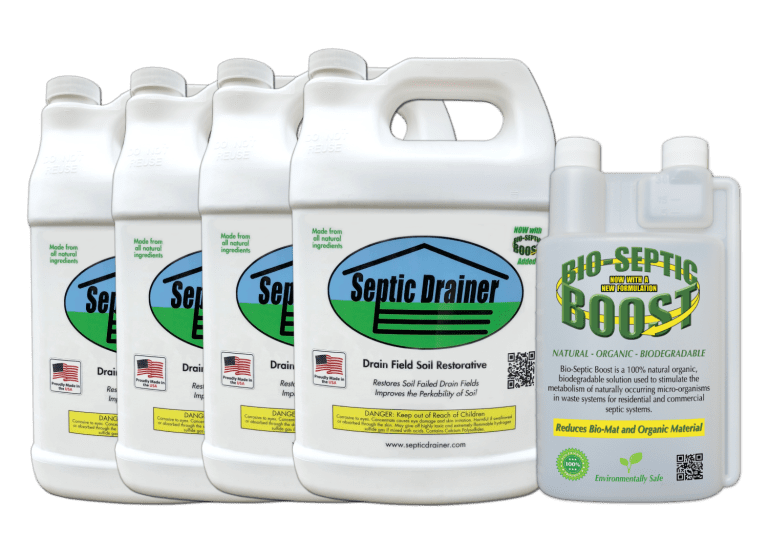
RCS II, Inc offers multiple repair kits based on system condition and soil type. For moderately clogged systems, the standard Drain Field Repair Kit includes four gallons of Septic Drainer and one quart of Bio‑Septic Boost. This combination addresses soil hardness and microbial imbalance efficiently.
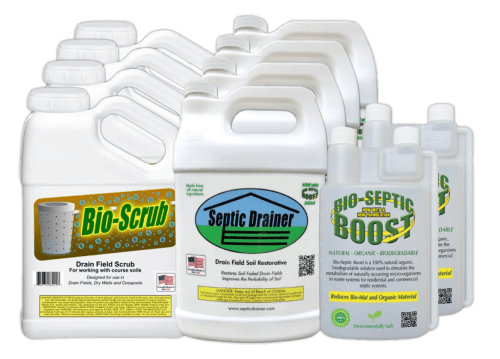
For older or heavily impacted systems, the Mega Drain Field Repair Kit provides double the volume to remedy deep-seated issues. Each kit includes step-by-step application guidance, so homeowners can confidently restore septic drain field cleaning results without professional help.
Best Practices During and After Application
Preventive Maintenance for Lasting Septic Health
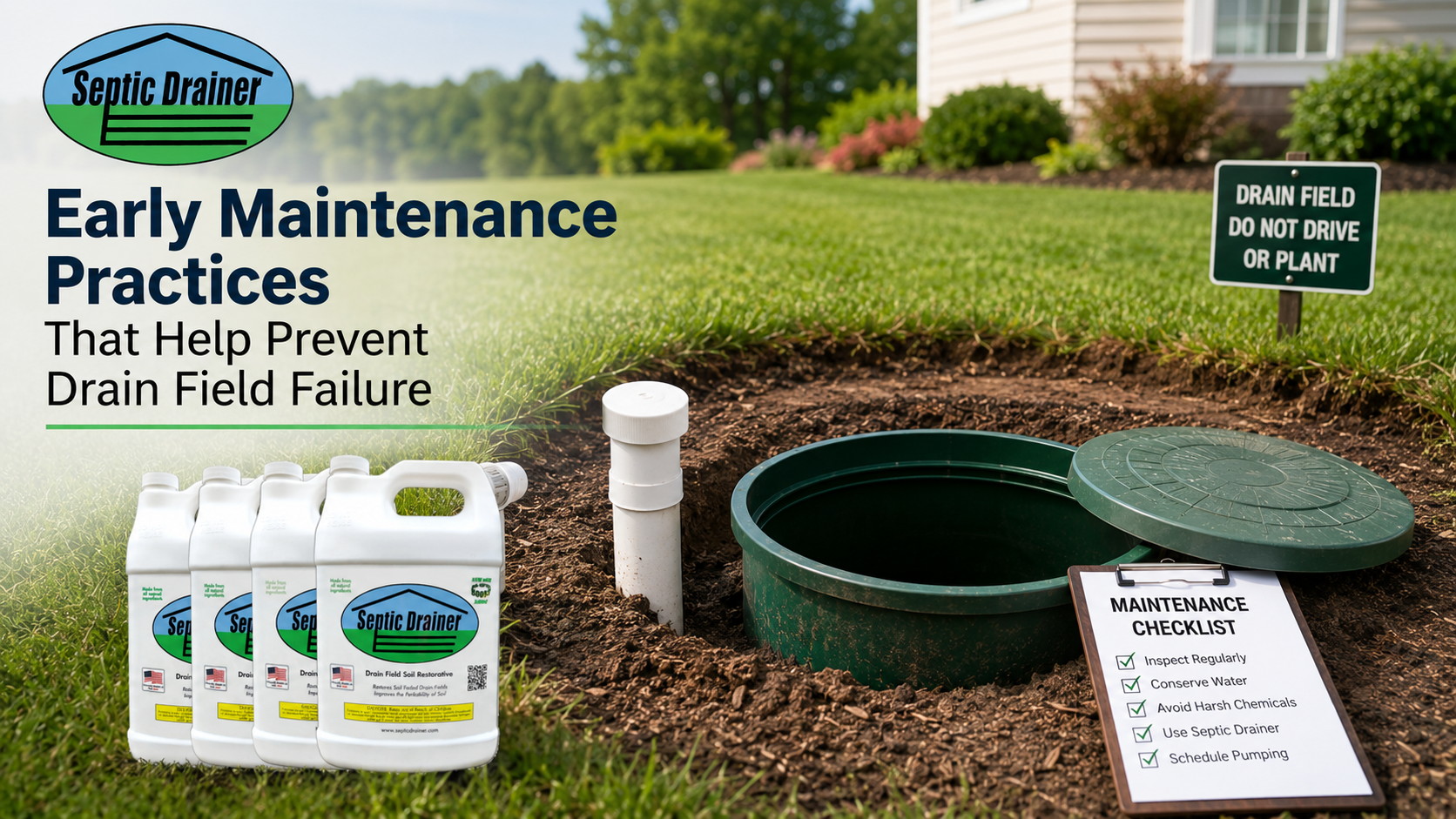
Regular use of septic system cleaner in combination with bio-stimulants helps keep soil permeable and bacteria active. RCS II, Inc. offers a Maintenance Starter Kit with sufficient product for six months of scheduled application. This kit includes Septic Drainer, Bio‑Septic Boost, and a tank location marker for easy access. Routine use prevents buildup, extends drain field lifespan, and reduces the need for reactive cleaning.
When Cleaning Alone May Not Be Enough?
Septic drain field cleaning can restore flow in many situations—but when soil remains impermeable or Bio‑Mat persists, cleaning water may continue to pool at the surface. Handling sodium buildup and soil compaction requires a soil conditioner first. If basic cleaning doesn’t fully resolve symptoms like odors or slow drainage, consider a complete system check and ongoing use of treatment solutions.
Partnering With Professionals When Needed
Some cases require more than DIY care. If water continues pooling or slow drainage does not improve, consult septic professionals. They may provide enhanced support, especially for larger systems or challenging soil conditions. Combining professional guidance with Septic Drainer and Bio‑Septic Boost gives the best chance to preserve septic drainage and prevent long-term failure.
Final Insights on Enhancing Cleaning Outcomes
Septic drain field cleaning works best when combined with a targeted septic system cleaner and bio‑stimulant. Soil conditioning restores natural absorption, and aerobic bacteria eliminate blockages like Bio‑Mat. RCS II, Inc. solutions deliver both, enabling effective cleaning and long-term system resilience.
Using this two-pronged approach transforms septic maintenance. It exceeds what basic cleaning alone can achieve, reversing the causes of drain field failure without digging or costly replacement. With regular application and occasional re-treatment, homeowners can keep their septic systems running smoothly for years—delay costs, eliminate odors, and restore reliable drainage.
Frequently Asked Questions
A septic system cleaner works by breaking down organic waste, grease, and solid buildup inside the tank and piping. It helps maintain flow, reduces odors, and prevents clogs that could lead to expensive repairs or system failure.
You may need septic drain field cleaning if you notice soggy soil, slow drains, or unpleasant smells near your drain field. These symptoms often signal buildup or blockage in the soil, requiring targeted cleaning to restore filtration.=
While a septic system cleaner can help keep things running smoothly, it’s not a complete solution. Regular inspections, tank pumping, and proper water usage are essential to prevent issues beyond what cleaners can manage.
Septic drain field cleaning targets the soil around the field to remove Bio-Mat buildup and excess solids. This improves absorption and restores natural filtration, often solving problems without replacing the entire field.
You should not rely solely on a septic system cleaner if your tank hasn’t been pumped in a long time. Solid waste buildup needs to be professionally removed first; then cleaners can help maintain the system between pump-outs.
Most systems benefit from septic drain field cleaning every few years, especially if there’s heavy usage. If you notice signs of trouble or your system is aging, more frequent cleanings can help extend its life and performance.
Not all septic system cleaners are safe for long-term use. Harsh chemicals can kill beneficial bacteria and damage pipes. Opt for eco-friendly or biological cleaners that support your system’s natural functions without causing harm.
[/fusion_text][/fusion_builder_column][/fusion_builder_row][/fusion_builder_container]