Summary: Clay soil has a dense structure that affects how quickly wastewater moves through a septic drain field. When poor drainage combines with soil compaction, organic buildup, or excessive wastewater loading, the system may develop slow drainage and surface pooling. Understanding these risks helps homeowners recognize early warning signs, protect soil performance, and determine when clogged drain field repair or professional assessment may be appropriate.
A septic system depends on soil to receive, filter, and disperse treated wastewater after it leaves the septic tank. In a conventional system, wastewater enters the drain field through distribution pipes and gradually moves into surrounding soil. Clay-heavy soil often presents a greater drainage challenge because its fine particles create smaller spaces for water movement. When these spaces become restricted by compaction or buildup, clogged drain field repair may become necessary. Homeowners dealing with related leach-field issues may also encounter the need for leach drain repair, depending on the system design and extent of the problem.
Why Clay Soil Creates Drainage Challenges?
Clay is a soil that is composed of very tiny soil particles that are very tightly packed together. This arrangement reduces the permeability of the soil and allows less water to pass through it than does coarser soil like gravel or a sandy soil.
For septic drain fields to absorb and process wastewater, the soil needs to be suitable for them. Wastewater can stay on the soil surface longer because clay hinders the flow of water. The hydraulic load (water flow) can be larger due to rainfall or due to water usage associated with domestic activity, and see the problem was more apparent.
A system failure does not always start with the complete failure of the system. A gradual deterioration of drainage could initially manifest as a decrease in absorption, wet spots or areas, foul odours or excessive growth over sections of the drain field.
How Soil Compaction Makes the Problem Worse?
Another critical consideration with regard to septic systems, especially those made of clay, is compaction. Repeated use (heavy trucks, construction equipment) over the drain field can compress soil particles and affect the soil’s pore space.
EPA guidelines suggest steering clear of bringing vehicles and heavy equipment into the vicinity of drain fields because soil compaction can compromise pipes and diminish soil’s effectiveness. The homeowners should also make sure that there are no excess water sources, such as roof drains, sump-pump discharge, etc., located near the drain field.
Clay soil is particularly important, as it is compact and has built-in restrictions to water flow. Further compaction may further limit infiltration and bring about saturated conditions.
Bio-Mat and Organic Buildup
Over the course of time, a biological layer will naturally form in a septic drain field near the interface between the wastewater and the soil. The research by EPA brings to light this term, a clogging mat, or biomat, that builds up as the wastewater infiltrates the soil. Other factors such as overloading may impact infiltration in the long term.
In cases where the soil already has drainage problems, organic matter can form another barrier to drainage. Septic Drainer’s repair process tackles the problem of clogged soil and bio-mats in particular. Its repair kit for clay, sandy loam, and gravel-based soils combines Septic Drainer with Bio-Septic Boost, which the company describes as supporting bacterial activity and addressing bio-mat issues. Instead, it addresses soil issues instead of septic problems.
Signs of Drainage Problems in Clay Soil
A few indications may be noticed by the homeowner when a septic drain field is not absorbing the wastewater efficiently:
- Persistent wet or saturated areas above the drain field.
- Slow drainage from plumbing fixtures.
- Sewage odors around the septic area.
- Unusually green or fast-growing vegetation.
- Surface pooling after normal household wastewater use.
- Wastewater backing up into plumbing fixtures.
These symptoms are not certain evidence of drain-field failures. There are also a number of septic issues that can emit a lot of the very same indications, so homeowners must determine the actual issue prior to deciding on the fix. A blocked or clogged drain field can flood, causing pollution to the sewer system or backup up inside the house, EPA says.
How Homeowners May Protect a Clay-Based Drain Field?
Beginning good maintenance begins by controlling what is put into the septic system and how the system drain field is situated. If water is overloaded, water absorption of the soil is increased. Laundry schedules, water conservation measures such as reducing hydraulic stresses from unnecessary water usage, and leak detection/repair could all help to reduce hydraulic stress.
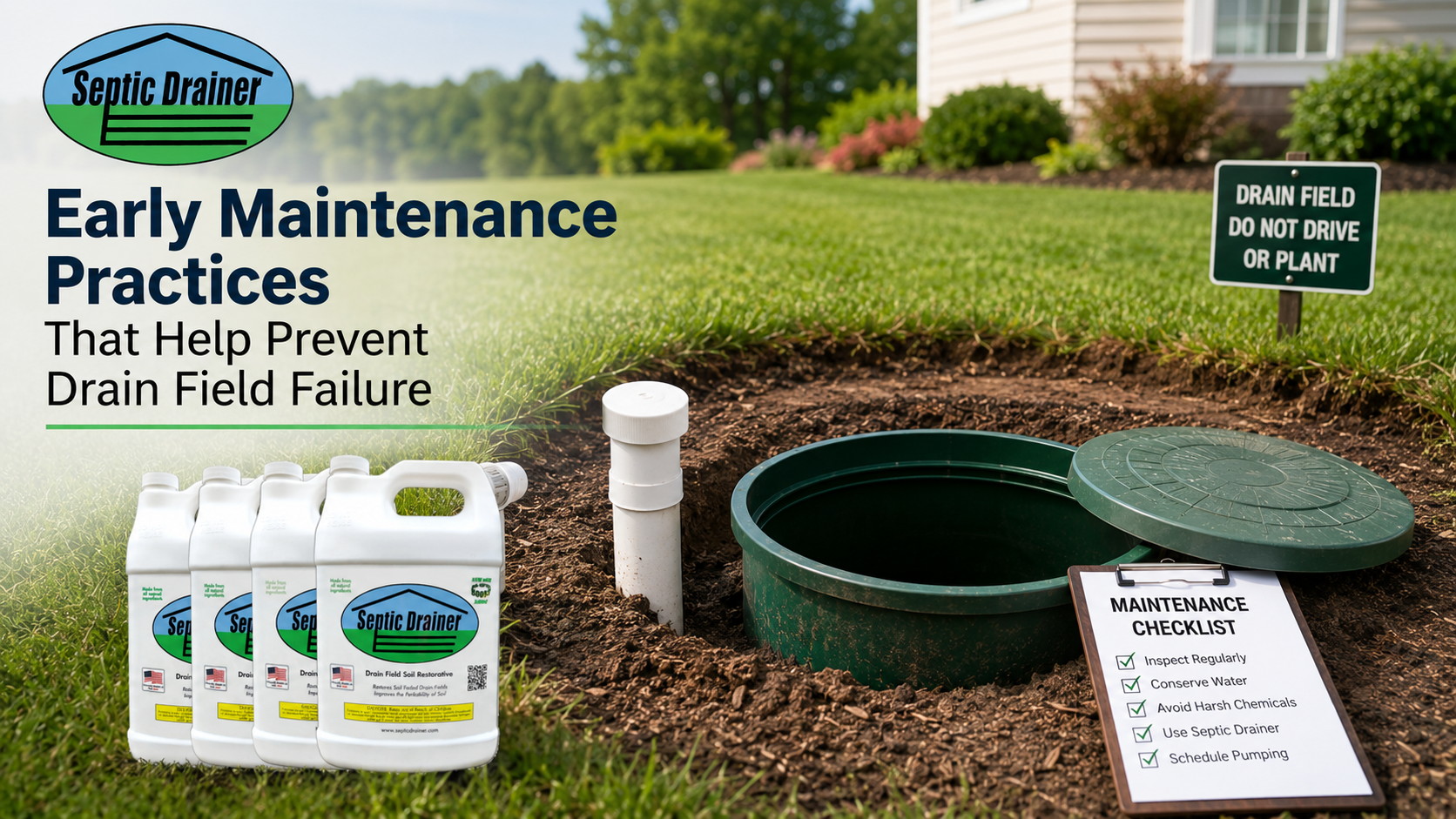
Homeowners also should try and defend the surface of the soil. Any parking of vehicles, placing of heavy equipment or impermeable cover over the drain field can disrupt soil functions. Avoiding further saturation with stormwater is another step to reduce initial saturation. The regular septic tank maintenance is also important. EPA advises frequent inspecting and pumping, as solids can build up and progress towards the drain field and cause blockage.
Managing Water Flow Around Clay Soil
Managing water around a clay-based septic drain field plays an important role in maintaining drainage performance. Rainwater, roof runoff, and water sources generally on the outside of the house should not be allowed to come in contact with the drain field, as excessive water may further compact the soil already present.
Proper grading can keep surface water from entering the septic system. It’s also important for homeowners to not grow deep-rooted vegetation directly above the system, as the roots can cause damage to pipes and soil. It is good practice to inspect the drainage regularly to detect any changes at an early stage of their development, before they grow into more serious issues. If the saturation or slow absorption doesn’t stop, professional evaluation can be used to decide on maintenance, fixing the leach drain, or any other remedial measure.
Conclusion
Clay soil does not automatically mean a septic system will fail, but its dense structure requires careful management. Homeowners need to watch for slow drainage, saturated soil, odors, pooling, and other warning signs. When soil clogging contributes to poor performance, clogged drain field repair may offer an approach worth evaluating alongside professional diagnosis and proper septic maintenance.
Septic Drainer provides products designed for drain-field maintenance and restoration, including solutions specifically marketed for clay-based systems. By understanding soil conditions and responding to drainage problems early, homeowners may better protect their septic investment and avoid unnecessary disruption. Explore Septic Drainer repair and maintenance solutions to determine which approach fits your system.
Frequently Asked Questions
- Why does clay soil drain slowly?
Clay has small particles that are very close together, which results in less open space for water to move in and out of the clay. This could reduce the rate of water uptake into the soil compared to other soils that may be more absorbent.
- What are common signs of a failing drain field?
Standing water, saturated soil, foul odours of sewage, slow drains, overly healthy vegetation and wastewater backing up are all common warning signs to look for. These can be caused by a number of things, and correct evaluation is important.
- Does soil compaction affect a septic drain field?
Yes. Soil compaction from heavy vehicles and equipment can reduce and/or increase the pore space in the soil. The EPA advises not to park vehicles and heavy equipment near drain fields.
- Does clay soil always require a different septic system?
Not necessarily. Site-specific soil, groundwater, septic system design and permitting conditions are all determining factors in septic system suitability. For certain locations where the local soils are not appropriate, other plans or modified plan designs may be necessary.